
As a day trader, you’ll be trading stocks and ETFs listed on the NYSE and NASDAQ. Combined, they provide over 10,000 possible symbols/companies to trade.
Stock selection is one of the few places a trader can add edge while keeping binomial process trading controls fixed: risk amount, reward amount, exit prices, and position size.
Because there are so many, day traders use “scanners” to filter them down to a manageable number that can be watched in their trading platform. These are known as “Stocks in Play.”
Five common filters are price, daily volume, float (outstanding shares), overnight gap, and pre-market volume:

Table 5.1. Common scanner filters used by day traders.
During the hour before the market opens at 9:30, these filters typically yield 5-50 symbols. During this hour of “pre-market prep,” the trader will evaluate the scanner results and further downselect to create their personal watchlist for the day. This usually involves 1-10 symbols entered directly into the trading software, so candlestick charts and other price information can be monitored for trade setups.
On most days, a watchlist of 1-10 symbols will present several tradable setups that match a trader’s playbook within the first hour after market open. Once in a while, you may not take any trades, and there is no shame in that. Sometimes the market is flat, and other times you might just be looking at the wrong symbols at the wrong time. No need to force it-live to trade another day.
Trade Ideas
Trade Ideas is the de facto scanner for day traders. It can be expensive, with monthly fees exceeding $100, but it is worth every penny. Figure 5.1 shows four scanners running simultaneously in Trade Ideas.
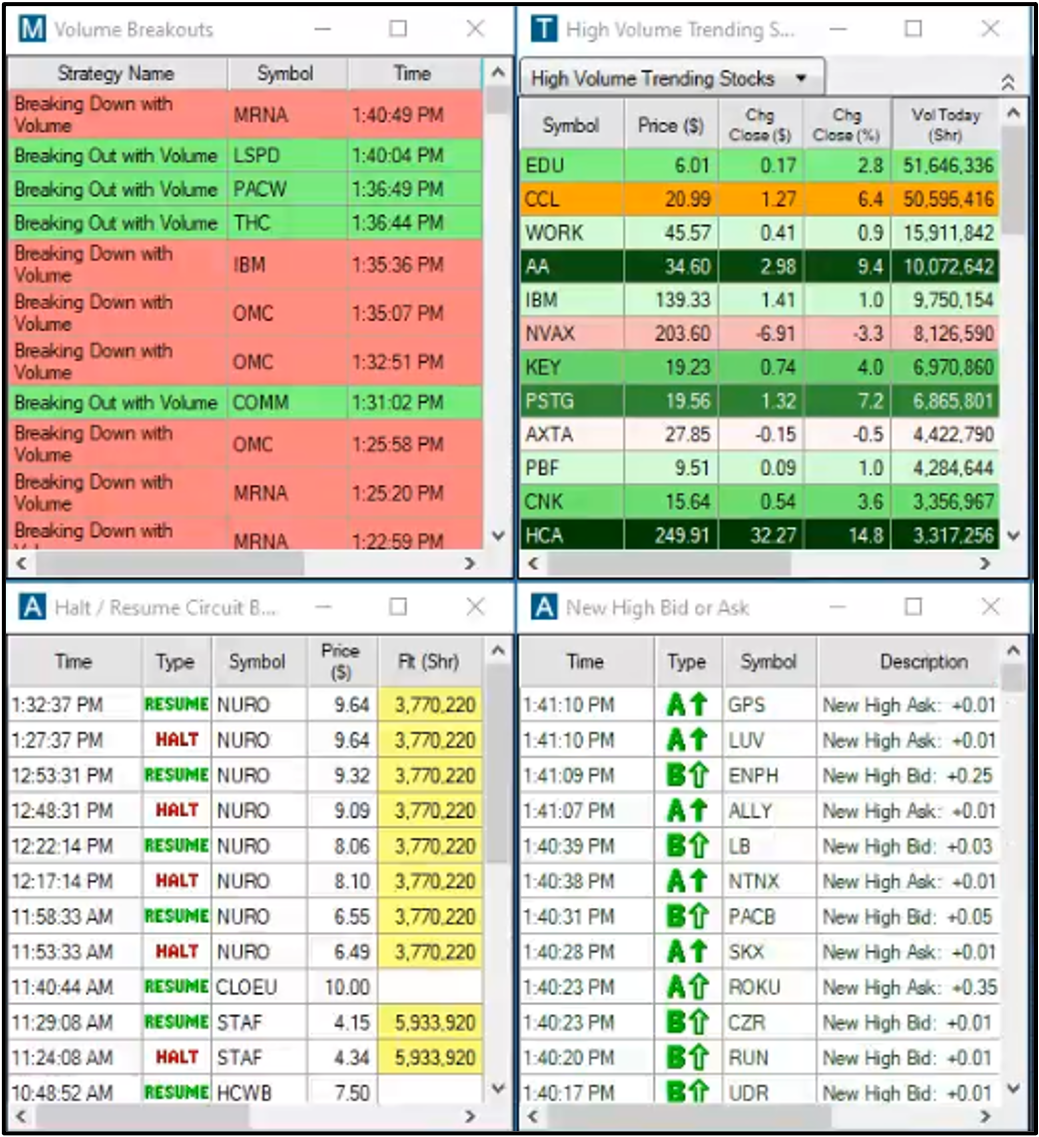
Figure 5.1 – Trade Ideas scanners.
Crowd Sourcing Stocks
The best scanner might be no scanner at all – let other traders do the work for you. Everywhere you look online (Reddit, Discord, YouTube, 𝕏, etc.), there are trading groups full of traders sharing their watchlists and announcing their trades in real time. Recommendations from other traders are generally superior to Trade Ideas because real people have taken the next step of fully evaluating the scanner results and determining which are real trade opportunities and which are not.
Building a Watchlist
Even though they pass all the filters, many symbols found by scanners should not be considered Stocks in Play. These may be false positives or symbols that technically met your scanner’s criteria but really don’t have much going on. Perhaps one shareholder sold a block of shares to another, which created enough volume and a change in stock price to trigger the scanners, but it’s not a stock day traders would be interested in adding to their watchlists.
Figure 5.2 shows a good scanner result with a clear trend and clean price action, while Figure 5.3 shows an example to avoid. CRM shows a clear upward trend since the previous day’s close, and also shows strong validation from volume on the 1-minute chart. BHP shows wild swings with little volume, and more or less flat after that. It may register on the scanners just due to one large trade.
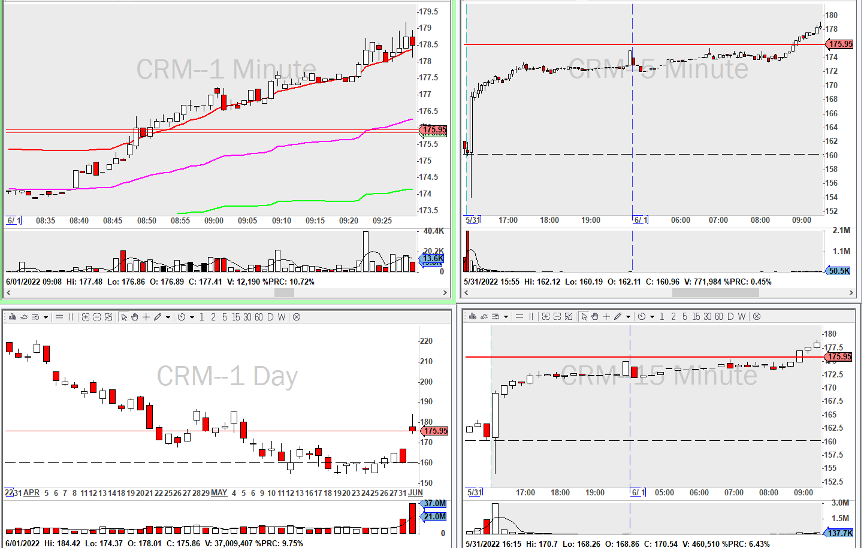
Figure 5.2 – Example of scanner result with strong overnight gap and clear price action that a trader would likely add to their watchlist.
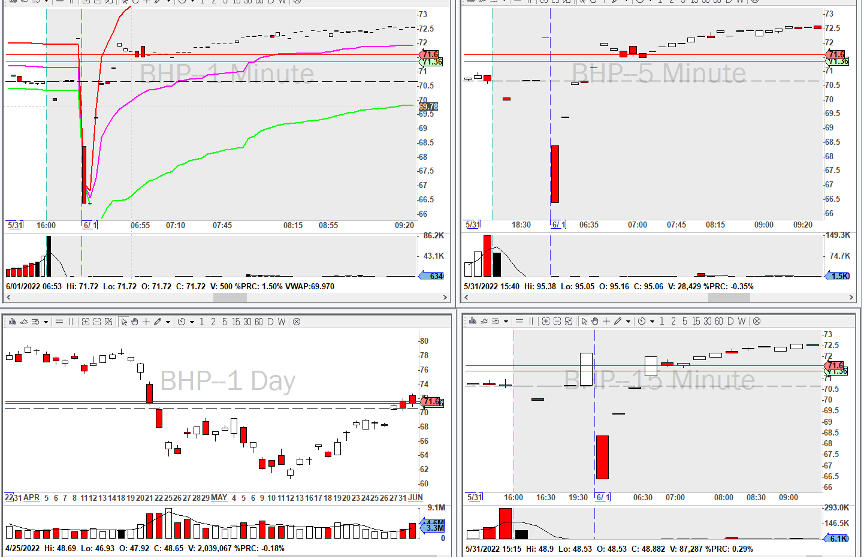
Figure 5.3 – Example of scanner result that would not be added to trader’s watchlist due to lack of strong price action and clear trend.
Checklist for evaluating scanner results for creating a watchlist:
- Exclude symbols triggered by block trades or other liquidity artifacts that lack true catalysts or sustained activity.
- Identify the primary catalyst and confirm it is new, not recycled.
- Evaluate the catalyst’s quality and strength relative to typical market conditions.
Symbols that pass this evaluation phase are added to a trader’s personal watchlist and entered into their trading platform for trading. The trader will typically end up with between 1 and 10 symbols on their watchlist.